


Veneers in Brazil: How to Get Natural Results Without Over-Prepping Your Teeth

You can get natural looking veneers in Brazil without over-prepping your teeth when the smile is designed first and preparation follows that design, removing only what is necessary and ideally staying within the enamel. At BCX Odontologia in São Paulo, a mock-up approved by the patient guides every millimeter of preparation.

Most people who dream of a new smile carry a silent question: what will happen to my real teeth? It is a question that often goes unspoken during consultations, yet it shapes the entire decision. For international patients, the concern grows even stronger, because the treatment happens far from home and the result will travel with them for decades.
The good news is that modern aesthetic dentistry has moved firmly toward conservation. Today, a beautiful smile and healthy natural teeth are not opposing goals. This guide explains how conservative veneers are planned, which decisions protect your enamel, when preparation is truly necessary and how to recognize a clinic that respects your natural teeth before you travel to Brazil.
If you would like to know how conservative your own veneer plan could be, our patient concierge at BCX Odontologia can walk you through the possibilities on WhatsApp.
Why do veneers in Brazil sometimes involve too much preparation?
Over-preparation usually happens when the teeth are reduced before the final smile has been designed. Without a clear target shape, reduction tends to be uniform across the whole surface, even in areas where the new veneer would not need extra space. The result can be more enamel removed than the case required.
The solution is not to avoid preparation at all costs, but to make every reduction intentional. When the dentist knows exactly where the new smile will sit, preparation becomes precise and often minimal.
What is the difference between subtractive and additive planning?
Subtractive planning starts from the existing tooth and removes structure to make room for the veneer. Additive planning starts from the ideal final smile and asks a different question: where does this new shape actually need space? In many cases, especially when teeth are small, worn or slightly inward, the new veneer adds volume, and little or no reduction is needed. This additive mindset is the foundation of conservative veneers.
Why is enamel worth protecting?
Enamel is the most reliable surface for bonding porcelain. Veneers bonded predominantly to enamel tend to show more predictable long term performance, lower risk of sensitivity and a stronger bond. Once preparation reaches the dentin beneath, bonding becomes more technique sensitive and the tooth can react more to temperature. Preserving enamel is, therefore, both a biological and an aesthetic decision.
How are natural results achieved with minimal preparation?
Natural results with minimal preparation come from a sequence of decisions made before any instrument touches the tooth. At BCX Odontologia, this sequence usually includes:
Facial and smile analysis: proportions, lip line, gum line and facial features guide the design
Digital smile design: the new shape is planned digitally before anything happens in the mouth
A mock-up on your teeth: you see, feel and approve the smile in the mirror and in natural light
Preparation through the mock-up: reduction happens only where the approved design needs space
Thin, high-performance ceramics: materials that remain natural looking even in very thin layers
Individual laboratory characterization: color, translucency and texture are refined by hand
Can whitening or aligners reduce preparation?
Yes, and this is often where the biggest savings in tooth structure happen. Whitening before veneers lightens the natural teeth, so the veneers need to mask less color and can be thinner. Aligners before veneers move crowded, rotated or forward teeth into a better position, which can reduce or even eliminate the need for reduction. These steps add time, but they protect what cannot be replaced.
When is more preparation actually necessary?
Honest planning also recognizes limits. Teeth that are very dark, heavily restored, fractured or significantly forward may require more preparation to achieve a natural and durable result. In some of these cases, a crown may even be the appropriate restoration. What matters is that the level of preparation is explained tooth by tooth, with a clear reason, before you agree to anything.
Are no-prep veneers the answer for everyone?
No. No-prep veneers can be an excellent choice when teeth are small or slightly inward. When teeth are already forward, adding a layer without preparation can create a bulky smile and push the lips outward, which looks less natural. Conservative dentistry is not about doing nothing. It is about doing only what the smile truly needs.
At BCX Odontologia in São Paulo, we often see patients arrive convinced that veneers always require heavy reduction. When they see their approved mock-up and understand which areas actually need reshaping, many are surprised by how much of their natural teeth can be preserved.
Moment one: before you travel to Brazil
How do I identify a clinic that preserves natural teeth?
A conservative clinic talks about your face and your smile design before discussing preparation. These checkpoints help when comparing clinics for veneers in Brazil:
Photos and X-rays are requested before any plan is suggested
Dentists are registered with the regional dental council, in São Paulo the CRO-SP
A mock-up is offered before any preparation
The expected preparation is explained for each tooth
Whitening and aligners are discussed when they could reduce preparation
The clinic is comfortable saying when veneers are not the best option
What should I send for the online consultation?
At BCX Odontologia, planning begins with an online consultation before you travel. Send a natural smile photo in daylight, a full face photo while smiling, close up photos of your teeth from different angles, a recent panoramic X-ray if available and information about any old fillings or crowns on your front teeth.
How many days should I plan in São Paulo?
For porcelain veneers, around one to two weeks of weekday appointments in São Paulo is common, because each veneer is produced in the laboratory between visits. When whitening or aligners are recommended first, treatment may be organized in phases, sometimes across more than one trip. The online consultation helps you understand which path fits your timeline.
If your trip is starting to take shape, the BCX Odontologia concierge can organize your online consultation so the design of your smile, and how conservative it can be, are discussed before you book your flight.
Moment two: during your treatment in São Paulo
What happens step by step?
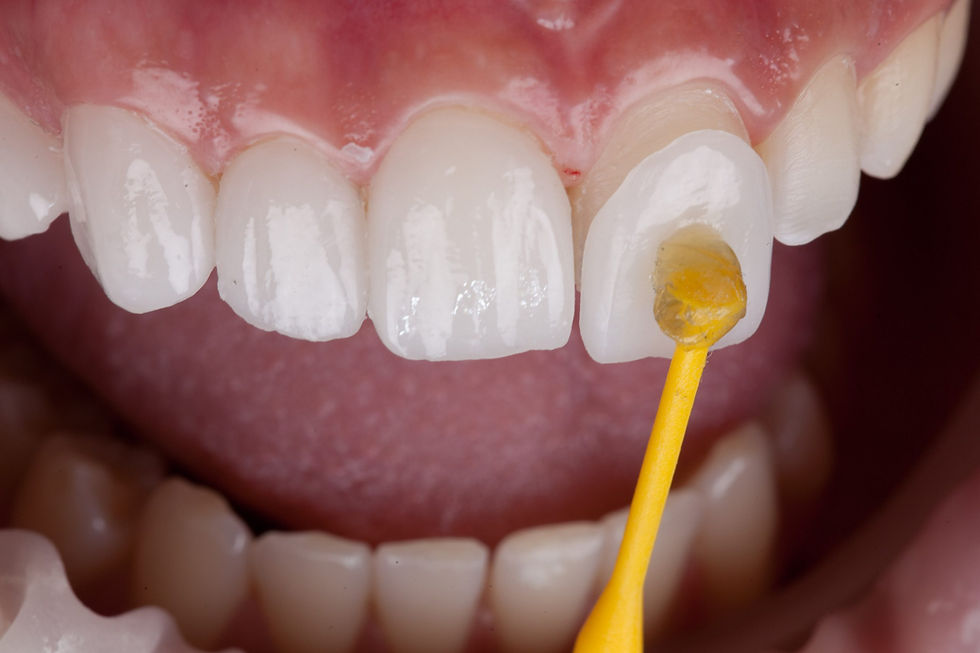
The process begins with a clinical exam, photographs and a digital scan. Your smile is designed and tested with a mock-up, and only after your approval is preparation performed, guided by that design and often limited to the enamel. Temporary veneers protect your teeth while the laboratory works. At the final visit, the veneers are tried in, checked in natural light and bonded.
To see natural smile transformations and the day to day of our clinic in São Paulo, visit the BCX Odontologia | Dentista Brooklin (@bcxodontologia) • Instagram profile.
Is the treatment comfortable?
Minimal preparation within the enamel is usually a comfortable experience, performed with local anesthesia. For patients with dental anxiety, conscious sedation can be considered when clinically indicated. With a low-volume model of around four patients per day, BCX Odontologia dedicates unhurried time to every step.
How will communication work?
International patients are supported in English by the BCX Odontologia patient concierge before, during and after treatment, from the first contact to aftercare. During in-person appointments, communication with the dentist is supported by real-time translation technology, so you can ask exactly what will be done to each tooth.
How are the plan and payment presented?
You receive a written treatment plan with procedures, materials, number of veneers, visits and investment, along with an informed consent and a service agreement signed digitally. Nothing begins without your approval.
What if my flight is delayed?
Temporary veneers protect your prepared teeth, so a short delay can usually be accommodated. The concierge reorganizes your schedule with you. The clinic is located in front of the Vila Cordeiro monorail station, close to Av. Jornalista Roberto Marinho, with valet parking in the building.
Moment three: after you return home
What is normal after conservative veneers?
Mild sensitivity to cold may appear in the first days and usually fades quickly, especially when preparation stayed within the enamel. Your lips and tongue may take a few days to adapt to the new shape. A rough edge or uneven bite should be reported to the clinic.
How long do conservative veneers last?
Porcelain veneers bonded mainly to enamel can last many years, often more than a decade, with good hygiene, regular checkups and protection against grinding. Preserving enamel at the beginning is one of the most effective ways to support that longevity.
How do I care for my veneers?
Use a non-abrasive toothpaste, floss daily, keep regular cleanings and wear a night guard if you grind. Avoid biting hard objects with your front teeth. Healthy gums protect the margins and keep the result natural.
How does follow-up work from abroad?
The concierge remains available after you return, coordinating photos, questions and remote conversations with the dentist when needed. You leave with a treatment summary, so a dentist in your home country can continue your care with accurate information.
Natural veneers in Brazil start with respect for your teeth
Getting veneers in Brazil without over-prepping your teeth depends on designing the smile first, approving it with a mock-up and preparing only where that design requires. São Paulo offers international patients access to this conservative approach, and BCX Odontologia, which welcomes patients from more than 15 countries, plans each smile to preserve as much natural tooth as possible while delivering a result that feels authentically yours.
Written by:
Dr. Beatriz Kawamoto
CRO-SP 133.746DDS, University of São Paulo (USP)
Studied Dentistry in Japan, Okayama University
MBA in Management and Innovation, USP DNA
Founder of BCX Odontologia, São Paulo, Brazil
Frequently Asked Questions
Do veneers damage natural teeth?
Veneers do not damage natural teeth when they are planned conservatively. In many cases, preparation is limited to a small amount of enamel, and some cases need no preparation at all. The key is designing the final smile first and reshaping only the areas that design requires. Excessive reduction usually happens when preparation is performed without a clear target shape, which is why a mock-up is so valuable.
What is additive planning for veneers?
Additive planning starts from the ideal final smile instead of the existing tooth. The dentist identifies where the new shape actually needs space and where it simply adds volume. In patients with small, worn or slightly inward teeth, this approach often allows minimal or no preparation. It is one of the most effective strategies for preserving enamel while achieving a natural looking result.
How much enamel is removed for minimal-prep veneers?
In minimal-prep cases, reduction is usually measured in a few tenths of a millimeter and remains within the enamel. The exact amount depends on the position, color and shape of each tooth and on the approved smile design. Teeth that are dark, heavily restored or positioned forward may require more. Your dentist should explain the expected preparation for each tooth before treatment begins.
Can aligners help avoid tooth preparation for veneers?
Yes. When teeth are crowded, rotated or positioned forward, aligners can move them into a better position before veneers are placed. This can reduce or even eliminate preparation, preserving more natural structure. The overall treatment takes longer, and for international patients it may be organized in phases, with aligners first and veneers during a later trip to Brazil.
Does whitening before veneers make a difference?
Whitening before veneers often allows thinner veneers, because the natural tooth needs less color masking. It also ensures that any natural teeth remaining visible match the final shade of the veneers. Since porcelain does not change color with whitening, doing it first is usually the best sequence when lighter teeth are part of the goal.
How many days do I need in São Paulo for conservative veneers?
For porcelain veneers, around one to two weeks of weekday appointments in São Paulo is common, since each veneer is produced in the laboratory between visits. When whitening or aligners are recommended first, treatment may be divided into phases. An online consultation before travel helps define the most conservative plan and a realistic schedule for your trip.
Are no-prep veneers better for my teeth?
No-prep veneers preserve the most tooth structure, but they are not always the most natural choice. They work best when teeth are small or slightly inward. When teeth are already forward, adding veneers without preparation can make the smile bulky. The best option balances preservation with natural proportions, and that balance is defined during smile design.
How do I find a conservative veneer clinic in Brazil?
Choose a clinic that requests photos and X-rays before suggesting a plan, offers a mock-up before preparation, explains the expected reduction tooth by tooth and considers whitening or aligners when they can reduce it. In Brazil, confirm that the dentist is registered with the regional dental council. A clinic willing to tell you when veneers are not indicated usually values your natural teeth.
Will conservative veneers feel sensitive?
Mild sensitivity to cold can occur in the first days and generally fades as the teeth adapt. When preparation remains within the enamel, sensitivity tends to be lower, because the deeper layer of the tooth is not exposed. Persistent or intense sensitivity is not expected and should be reported to the clinic for prompt assessment.
Will someone at the clinic communicate with me in English?
Yes. International patients are supported in English by the BCX Odontologia patient concierge before, during and after treatment, from the first contact to aftercare. During in-person appointments, communication with the dentist is supported by real-time translation technology, so you can understand exactly what will be done to each tooth and approve every step with confidence.
If you would like to understand your options or speak with our team, contact BCX Odontologia on WhatsApp: https://wa.me/message/KAFKNYSDPIBNM1
To see real results and our day to day in São Paulo, follow BCX Odontologia on Instagram:BCX Odontologia | Dentista Brooklin (@bcxodontologia) • Instagram profile


Comentários