.png)


Minimal Prep Veneers: What's Real, What's Marketing, and What You Should Ask

Minimal prep veneers: what the term really means, where marketing takes over, and the questions that reveal the difference. Written by a dentist.
The language around cosmetic dentistry has become unusually comforting, and that is worth noticing.
Somewhere in your research you will have read about veneers described as ultra thin, painless, reversible, and requiring no drilling. You will have seen the phrase minimal prep used as though it described a product rather than a clinical decision. Perhaps you saw a before and after where the patient's teeth went from worn and uneven to flawless, with a caption explaining that almost nothing was removed.
If part of you relaxed reading that, and another part became more suspicious rather than less, both reactions are intelligent.
The underlying fear is specific and well founded. You know, even without clinical training, that enamel does not grow back. You have read the stories from people who were told the procedure was conservative and later discovered how much of their own tooth was gone. And you are now being asked to evaluate that risk using vocabulary written by the people selling the treatment.

Minimal prep veneers are a real and valuable clinical approach. They are also one of the most marketed phrases in cosmetic dentistry, applied loosely, sometimes to cases where the technique was never appropriate.
This article separates the two. What the terminology actually means in clinical practice, where the marketing version departs from it, what happens when the technique is used on the wrong patient, and the specific questions that reveal within a single conversation whether there is a diagnosis behind the promise.
To see more oral health tips, real stories of overcoming dental fear, and our day to day at BCX Odontologia, follow our Instagram:
Before your appointment: what minimal prep veneers really mean
The vocabulary, stated plainly
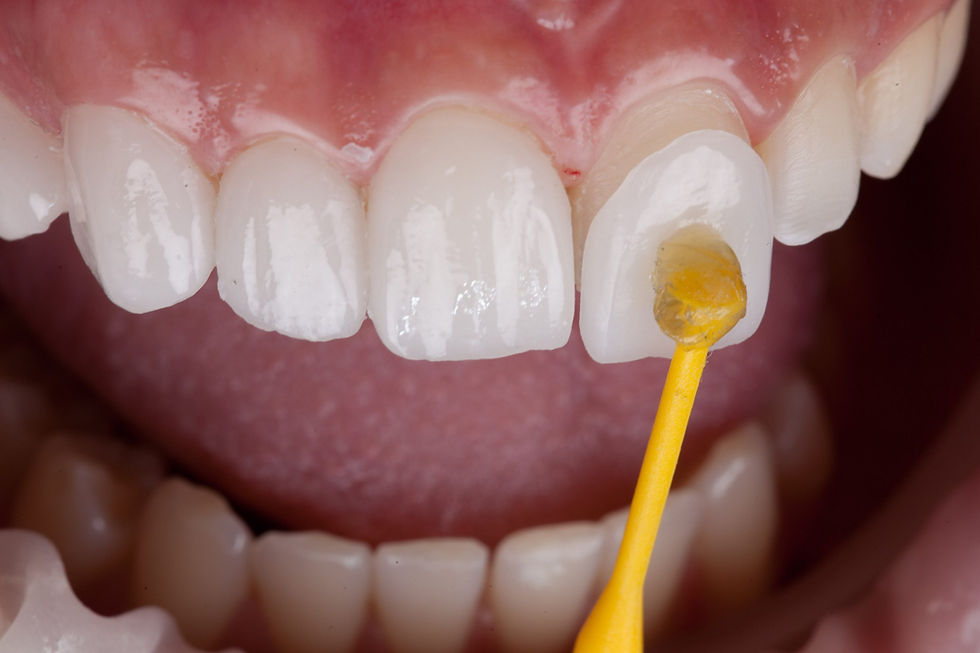
Minimal preparation describes a small, deliberate reduction of tooth structure, commonly in the range of two to five tenths of a millimeter, staying within enamel. No-prep, sometimes called prepless, means no reduction at all. Conventional preparation removes more, often six tenths of a millimeter or beyond, and in some cases exposes dentin.
The essential point, and the one marketing tends to obscure, is that these are not three products you can choose between. They are three outcomes of a diagnosis. Which one applies to you is determined by where your teeth currently sit, how much space exists for ceramic, the color of what lies underneath, and how your bite functions. We explain the clinical reasoning behind that decision in our article on veneers without over-prepping your teeth.
A clinic can tell you which approach your case is likely to allow. A clinic cannot sell you a technique in advance of knowing.
Where the marketing version departs from the clinical one
The first departure is the word reversible. No-prep veneers are sometimes described this way because nothing was removed, which is technically accurate and practically misleading. The ceramic is bonded to the tooth, and removing it requires grinding it off, which almost always costs some enamel in the process. The tooth is never quite returned to its original state.
The second is treating thinness as a quality rather than a consequence. Ultra thin is appropriate when the tooth sits in a position that allows volume to be added without the result looking bulky. On a tooth that already protrudes, the same thin ceramic produces a thick, forward appearance and gum margins that are difficult to keep clean. Thinness is not a benefit in itself.
The third is painless. Minimal preparation is genuinely comfortable and often requires little anesthesia, which is a real advantage. Painless as a selling point tends to replace the conversation you actually need, which is about how much tooth will be removed and why.
The fourth, and most consequential, is selling a technique before diagnosis. When a clinic advertises no-prep veneers as its standard offering, the technique is driving the treatment rather than the diagnosis. That reversal is the entire problem, and it does not announce itself.
What happens when the technique meets the wrong patient
This is the part that marketing never describes, and it is worth understanding before you decide. When ceramic is added to teeth that already sit forward, the result pushes the upper lip outward. Patients describe it as fullness, tension when closing the lips, or a sense that their teeth arrive slightly before the rest of their face.
Margins that sit proud of the tooth surface, rather than blending into it, create a ledge where plaque accumulates. The gum responds with chronic inflammation, which over time produces exactly the dark line patients were hoping to avoid.
In cases of crowding, adding ceramic without first aligning the teeth means the prominent teeth must be reduced to bring everything onto the same plane. The procedure is then no longer minimal, whatever it was called when it was sold.
And where a dark tooth or a metal post lies underneath, thin translucent ceramic will not mask it. Forcing the result requires either more thickness or more opacity, and both move away from what made the approach attractive.
None of this means the technique is flawed. It means the indication matters more than the label.
The questions that reveal whether there is a diagnosis behind the promise
These are worth asking in writing, before any payment. How much enamel will be removed in my case, in millimeters, and on which teeth. A clinic that has examined your records will answer with a range and an explanation. A clinic selling a technique will answer with reassurance.
Will the preparation be guided by an approved wax-up. Guided preparation means reduction happens only where the design requires it, which is how minimal preparation stays minimal in practice rather than in name.
Will I see and approve a trial smile before anything is prepared. This is the single most protective step in cosmetic dentistry, and it should be standard rather than an upgrade.
Do I need aligners or whitening first. A clinic willing to recommend a preliminary phase, which delays revenue, is telling you something about how it practices.
Are there teeth you would not treat. Every honest plan contains at least one.
What would make this case unsuitable for a minimal approach. The willingness to answer this question honestly is, in my experience, the clearest signal available to a patient.
Signals worth noticing, in both directions
What suggests a careful clinic: diagnosis required before any definitive quote, a named professional with a verifiable registration number, which in São Paulo means a CROSP number, a trial smile included as standard, cases documented three and five years after treatment, willingness to treat fewer teeth than you asked about, and a written plan naming each tooth, the material, and the expected preparation depth.
What suggests technique driven selling: a fixed number of veneers offered before examination, no-prep presented as universally suitable, complete transformations promised in two or three days, discounts tied to a deadline, portfolios where every result looks identical, and the absence of any stated limitation. Broader guidance on evaluating a clinic from abroad is in our article on choosing a dental clinic in São Paulo.

Records to send, and what a remote consultation can honestly conclude
Send a panoramic radiograph if you have one, films of the front teeth, recent treatment notes, and details of existing restorations. If you have had orthodontic treatment, include those records and whether you still wear a retainer.
Photographs matter more than most patients expect. Daylight near a window, no flash, since flash flattens color and hides translucency. A natural smile, a wide smile, a relaxed view with the lips apart, a profile, and close views of the upper front teeth. A short video of you speaking carries a surprising amount of design information.
With good records, a remote consultation can determine whether a conservative approach is realistic in your case, whether alignment or whitening should come first, how many days to plan, and a planning range for investment. It cannot confirm enamel thickness, gum response, or bite dynamics, all of which require in-person examination. A clinic presenting a preliminary plan as final before seeing you is promising something it cannot know.
Planning your days in São Paulo
Veneers with no preliminary treatment generally require seven to ten days. That window covers examination and records, the trial smile appointment with time to live with the design, guided preparation with temporary veneers, the try-in of the definitive pieces, bonding, and a final adjustment.
Whitening beforehand adds a few days. Aligners, when indicated, generally begin before you travel and are monitored remotely, with the veneer week scheduled once the teeth reach position.
BCX Odontologia is in Brooklin, in the South Zone of São Paulo, directly in front of the monorail station and about seven minutes from Campo Belo metro, close to Congonhas Airport. Book your return flight with two or three days of margin, since the steps that protect a conservative result are precisely the ones that should not be rushed.
If anxiety is part of this for you
Cosmetic treatment carries a particular vulnerability, because you are handing over your appearance and cannot undo the result yourself. For patients who also carry a history of fear of the dentist, both layers deserve acknowledgment rather than management.
Structure helps more than reassurance. Knowing the sequence in advance, an agreed hand signal that genuinely stops the procedure, longer appointments with pauses built in, and a quiet, discreet environment.
On comfort, minimal preparation often requires very little anesthesia, which is one of its genuine advantages. Nitrous oxide provides light relaxation while you remain awake. Conscious sedation with intravenous medication produces deeper relaxation with partial amnesia while you breathe on your own, and requires medical screening, continuous monitoring, a professional dedicated solely to your sedation, and a companion afterward. One honest note: the trial smile and try-in appointments are better experienced alert and upright in natural light, since your own judgment is part of the treatment.
To see more oral health tips, real stories of overcoming dental fear, and our day to day at BCX Odontologia, follow our Instagram:
During your appointment: how minimal prep veneers stay minimal in practice
Diagnosis decides the technique, not the other way around
The first in-clinic appointment should involve examination, radiographs, periodontal assessment, an intraoral scan, photographic documentation, and analysis of your bite, along with facial analysis of midline, lip dynamics, and how much tooth shows at rest.
This is where you learn which approach your case actually allows. Sometimes the news is better than expected, and fewer teeth need treatment than you assumed. Sometimes a preliminary phase is required. Either way, you hear it before anything is irreversible.
How the plan should be presented
A plan presented well names each tooth, states the ceramic, gives the expected preparation depth, and sets out the sequence, the number of sessions, and the investment in writing. It also states, plainly, which factors in your case favor a conservative result and which work against it.
You are entitled to take the plan away, sleep on it, and seek a second opinion. Pressure to decide immediately is itself diagnostic.
The trial smile, which is where the promise becomes verifiable
A temporary version of the proposed design is placed over your unprepared teeth. Nothing is removed and nothing is permanent.
Then you test it properly. You talk. You smile without thinking. You photograph yourself in daylight, indoors, and in poor lighting. You show someone whose honesty you trust.
For a minimal preparation case specifically, this appointment answers the question the marketing cannot. If the design requires significantly more volume than your teeth currently allow, you will see and feel it now, as bulk, as lips that do not close comfortably, as teeth that look added rather than improved. That is information, and it arrives while everything is still reversible.
Guided preparation, which is what the word minimal depends on
Once the design is approved, preparation is performed through it rather than estimated. Silicone guides made from the approved wax-up are positioned over your teeth so the dentist can see where the final surface will sit. Where the tooth is already inside that contour, nothing is removed. Where it protrudes beyond it, a calibrated amount is reduced, verified with depth instruments.
In many well planned cases, one or two teeth require no reduction at all while their neighbors require a small amount. That variation is the signature of genuine minimal preparation. Uniform reduction across every tooth is the signature of a technique applied rather than a case diagnosed.
Communication in English, and consent when something changes
At BCX Odontologia, consultations with international patients are conducted with simultaneous translation support, so the clinical conversation happens in English in real time rather than as a summary afterward. Treatment plans and post-treatment instructions are provided in English.
If preparation reveals something unexpected, such as an existing restoration larger than the radiograph suggested, you should be told while it is happening, given revised options, and informed of the effect on timeline, cost, and the conservative character of the plan before work continues. A plan that quietly becomes more invasive without that conversation is not the plan you consented to.
After your appointment: what conservative treatment protects over time
The first weeks
Mild cold sensitivity and gum tenderness are common and usually resolve within two to three weeks. Speech may feel slightly different for a day or two while the tongue adapts.
Avoid biting with the front teeth for the first day, then return to normal eating with permanent habits in place: no ice, no fingernails, nothing hard bitten with the front teeth.
Report promptly: pain that increases rather than decreases, a bite that still feels uneven after a week, gum tissue that stays red at a specific margin, or a rough edge catching your lip.
Air travel is uneventful after bonding. If a delay costs you an appointment, tell the clinic immediately. The standard solution is to complete the reversible stages, leave you with well made temporaries that are safe for weeks, and schedule bonding for a short return visit rather than compressing the trial smile, try-in, and bonding into one session.
Why preserved enamel matters years later
This is the practical reason conservative preparation is worth protecting, beyond the principle. Porcelain bonded predominantly to enamel forms a durable union that holds for decades. Bonding to dentin is weaker and degrades measurably over the years, increasing the likelihood of marginal staining and debonding. The published longevity figures that make veneers attractive, generally showing survival above ninety percent at ten years, come overwhelmingly from enamel bonded cases.
Preserved enamel also keeps future options open. A tooth with intact structure can receive a new veneer years later. A tooth extensively reduced has fewer paths available. We cover this in detail in our article on how long veneers and crowns last.
Maintenance, and coordinating care from the United States
Daily flossing around the margins. Professional cleaning every six months, mentioning that you have porcelain veneers so non-abrasive paste and appropriate instruments are used. Avoiding abrasive whitening toothpastes, which dull the glazed surface. Wearing the night guard consistently if one was indicated.
Leave the clinic with written instructions in English, a direct contact channel that reaches a clinical team, and complete documentation including clinical photographs, the ceramic brand and shade, laboratory specifications, and a tooth by tooth record of how much was prepared. That last detail is genuinely useful years later, for you and for any dentist who treats you.
Ask before you commit what happens if a veneer chips or debonds after you return home, what the terms are, and how quickly messages are answered across time zones.
A clinic that preserved your enamel, documented exactly what it did, and remains reachable afterward has told you more about its standards than any description of its technique.
Written by:
Dr. Beatriz Kawamoto
CROSP: 133.746DDS, University of São Paulo (USP)
Studied Dentistry in Japan, Okayama University
MBA in Management and Innovation, USP DNA
Frequently asked questions
What does minimal prep actually mean?
It describes a small, deliberate reduction of tooth structure, commonly between two and five tenths of a millimeter, staying within enamel. The important distinction is that it is the outcome of a diagnosis rather than a product you select. Whether your case allows it depends on where your teeth currently sit, how much space exists for ceramic, the color of the tooth underneath, and how your bite functions. A clinic can estimate from good records which approach is likely, but confirming it requires an in-person examination.
Are no-prep veneers really reversible?
Not in the way the word suggests. No reduction means nothing was removed before bonding, which is accurate. But the ceramic is bonded to the tooth, and removing it requires grinding it off, a process that almost always costs some enamel. The tooth is not returned to its original condition. Reversible is a reasonable description of the preparation stage and a misleading description of the treatment as a whole, which is worth understanding before you rely on it as a safety net.
Can anyone get minimal prep or no-prep veneers?
No, and this is where the term is most often misused. The approach works when there is room to add volume without the result looking bulky, which is generally true for teeth that sit slightly inward, teeth that are narrow with small gaps, and teeth worn shorter over time. Applied to teeth that already protrude, the result looks thick and the gum margins become difficult to keep healthy. A clinic offering the technique to everyone regardless of examination is marketing a method rather than diagnosing a case.
How do I know if a clinic is overselling the technique?
Ask how much enamel will be removed in your case, in millimeters and on which teeth. A clinic that has reviewed your records answers with a range and the reasoning behind it. Ask whether preparation will be guided by an approved wax-up, whether a trial smile is standard, and what would make your case unsuitable for a conservative approach. The willingness to answer that last question honestly is the clearest signal available to you. Fixed packages offered before examination point firmly the other way.
Do I need aligners or whitening before minimal prep veneers?
Frequently, and the recommendation protects you. When teeth are crowded or rotated, aligning them first means the ceramic can be thin. Without that phase, the prominent teeth must be reduced to bring everything onto the same plane, which is no longer a conservative procedure regardless of what it was called. Whitening first lightens the foundation, so the ceramic does not need to be opaque to reach the shade you want, and thinner ceramic behaves more naturally with light. Both phases add time and both reduce how much tooth is lost.
How many days do I need in São Paulo for veneers?
Plan on seven to ten days when no preliminary treatment is required. That covers examination and records, the trial smile appointment with time to live with the design, guided preparation with temporary veneers, the try-in of the definitive pieces, bonding, and a final adjustment two or three days later. Whitening adds a few days at the beginning, and aligner phases generally start before you travel. Leave a two or three day buffer before your return flight.
What if my flight is delayed and I miss an appointment?
Tell the clinic as soon as you know. A clinic experienced with international patients builds flexibility into the schedule and can usually reorganize within your remaining days. If the delay is significant, the standard solution is to complete the reversible stages, leave you with well made temporary veneers that are safe to wear for weeks, and schedule bonding for a short return visit. The trial smile, the try-in, and the bonding should never be compressed into a single session to save a flight.
Will my dentist in the United States be able to maintain them?
Yes, provided you leave Brazil with complete documentation, including clinical photographs, the ceramic brand and shade, laboratory specifications, and a tooth by tooth record of how much preparation was done. That last detail matters, because it tells any future dentist what remains of your natural tooth. Mention that you have porcelain veneers so non-abrasive pastes and appropriate instruments are used during cleanings. Most American dentists maintain well documented work from abroad without difficulty.
Do minimal prep veneers last as long as conventional ones?
Generally they last at least as long, and often longer, because the strength of a veneer depends heavily on bonding to enamel. Porcelain bonded predominantly to enamel forms a durable union, while bonding to dentin degrades measurably over the years. Published data on bonded porcelain veneers generally shows survival above ninety percent at ten years, drawn largely from enamel bonded cases. Longevity also depends on hygiene, gum health, whether you grind, and consistent professional maintenance.
Is it cheaper because less work is involved?
Not usually, and that is worth understanding. Conservative treatment requires more planning, not less: facial analysis, a digital design, a physical wax-up, a trial smile appointment, silicone guides, and calibrated preparation. The chair time is comparable and the laboratory work is often more demanding, since thin ceramic with natural texture is technically harder to produce. If a clinic presents a minimal approach as a lower cost option, the saving is most likely coming from the planning stages, which are precisely what protect your enamel.
How does conscious sedation feel, and would I need it?
Most patients describe a soft detachment rather than sleep. You breathe on your own and can respond to simple requests, though time passes quickly and memory is often partial. Local anesthesia is still used. Minimal preparation frequently requires very little anesthesia and most patients do not need sedation, though it can make the preparation session considerably easier for someone with significant dental anxiety. The design approval and try-in appointments are better experienced alert, since your own assessment of shape and color is part of the treatment.


Comentários