.png)


Do Veneers Look Fake? The Real Reasons Some Smiles Don't Look Natural

Do veneers look fake? The real reasons some smiles look artificial, and how natural results are planned in São Paulo. Written by a dentist.
There is a specific hesitation that shows up in almost every conversation about cosmetic dentistry, and it is rarely stated directly.
People do not say they are afraid of looking worse. They say something softer.
They mention a colleague whose smile changed over a long weekend and became the only thing anyone noticed about her face. They describe a television presenter whose teeth seem to belong to a different person. They say they want their teeth fixed, then add quickly that they do not want them to look done.
Underneath that is a real fear. Not of pain, and not of cost, but of being visibly altered. Of walking into a room and having people register something before they register you. And there is a second layer for anyone who has waited years to address their smile, which is the worry that trying to fix it will draw more attention than leaving it alone.
So do veneers look fake. Some do, unmistakably. And the reasons are specific, identifiable, and almost entirely decided during planning rather than during the procedure itself.
This article explains what the eye is actually detecting when a smile reads as artificial, covering proportion, color, translucency, surface texture, symmetry, and the way teeth relate to the lips and face. It also explains how a conservative planning sequence prevents those errors, what to verify before you commit to any clinic, and what the process looks like for someone traveling from abroad.
To see more oral health tips, real stories of overcoming dental fear, and our day to day at BCX Odontologia, follow our Instagram
Before your appointment: understanding why some veneers look fake
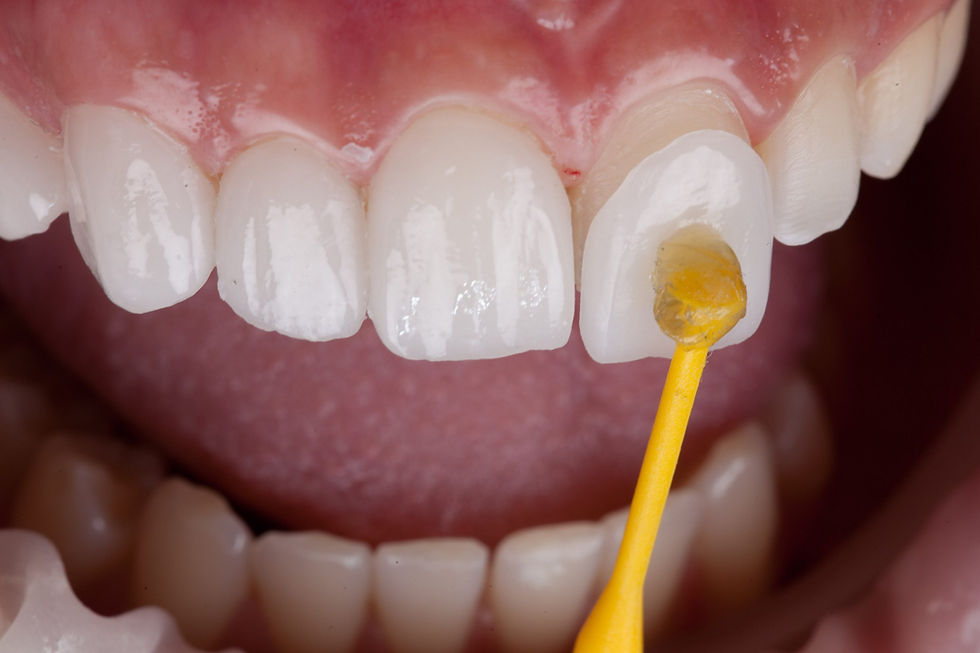
Too white is the least interesting reason
Excessive whiteness is the explanation most people reach for, and it is real but incomplete. Natural teeth are not a single flat tone. They carry more warmth near the gum, where the enamel is thinner and the dentin shows through, and become progressively cooler and more translucent toward the edge. They also sit in relation to the whites of your eyes, which is why a shade that looks correct on a shade guide can look wrong on a face.
A plausible result is usually the brightest shade that still respects that gradient and still sits within the range your face supports. A single, uniform, opaque white across ten teeth removes every internal variation that the eye uses to read enamel as enamel, which is why it registers as a surface rather than as teeth.
Translucency and the incisal halo
The edge of a natural upper incisor is slightly translucent, letting darkness from the mouth show through, often with a faint brighter line running along the very edge. That detail is called the incisal halo, and most people have never consciously noticed it, which is precisely why its absence reads as wrong.
Highly opaque ceramic blocks light entirely and produces an edge that looks like it was cut from a solid block. This frequently happens when thick material was needed to mask a dark tooth underneath, which is one reason whitening before treatment matters. The thinner the ceramic can be, the more naturally it behaves with light.
Surface texture, and why flat gloss looks artificial
Natural enamel is not smooth. It carries very subtle horizontal lines, gentle vertical lobes running from the edge toward the gum, and micro irregularities that scatter light in different directions. Photograph a natural tooth in daylight and the reflection breaks into several small highlights.
A highly polished, perfectly flat ceramic surface produces one large, continuous highlight instead. The eye does not analyze this consciously. It simply concludes that the surface is not enamel. Reproducing texture takes time from the ceramist, which is one of the first things sacrificed when a case is produced quickly.
Proportion, and the arithmetic behind a natural smile
Upper central incisors in most adults are close to a width of roughly seventy five to eighty percent of their height. Move far outside that and the result reads as either stubby or elongated regardless of how well it was made.
The relationship between teeth matters equally. Lateral incisors are naturally narrower and slightly shorter than centrals. Canines carry more chroma and a more rounded tip. When every tooth is built to the same width and the same length, the result is the row of identical rectangles frequently described as piano keys.
The incisal line and the smile curve
The edges of the upper front teeth should describe a gentle curve that follows the line of the lower lip when you smile, with the centrals slightly longer than the laterals and the canines picking the line back up. A completely flat incisal plane, where every tooth ends at exactly the same height, is one of the strongest signals of artificial work. It is also what makes some results resemble a denture rather than teeth.
The small triangular spaces between the tips of adjacent teeth, called interincisal angles, should open progressively as you move back from the midline. When they are all closed and identical, the teeth fuse visually into a single band.
Symmetry that is too perfect
Faces are not symmetrical, and natural smiles are not either. Slight differences in rotation, edge wear, and length between the left and right sides are part of what makes a smile look like it grew rather than like it was installed.
Perfect mirror symmetry is achievable in ceramic and almost always looks synthetic. Skilled work reproduces controlled asymmetry, which is a deliberate technical decision and not an imperfection.
Bulk, lip support, and the teeth that arrive before the face
If ceramic is added over teeth that already sit in a forward position, the result pushes the upper lip outward. The patient notices it as fullness, tension when closing the lips, or a sense that the teeth arrive slightly before the rest of the face.
This is one reason aligning teeth before cosmetic treatment frequently produces a better result than compensating with thickness. It also relates directly to how much natural tooth is removed, which we cover in detail in our article on veneers without over-prepping your teeth.
The gums are half the result
Gum architecture is frequently overlooked by patients and never by experienced clinicians. The highest point of gum on each tooth, called the zenith, sits slightly off center toward the back of the tooth, and its height differs between centrals, laterals, and canines. When those points are uneven or when the gum is inflamed at the margins, the eye reads the smile as artificial even when the ceramic itself is excellent. Healthy gums are not a finishing detail. They are a prerequisite, which is why any active gum disease is treated before cosmetic work begins.
How to evaluate a clinic's work before committing
Ask to see the clinic's own cases photographed in natural daylight rather than under ring flash, which flattens color and hides texture. Ask to see cases documented three and five years after treatment. Ask to see a case where only two or four teeth were treated and blended with natural neighbors, since that is far harder than doing ten and matching them to each other.
Ask how many teeth they propose treating in your case and why those specific teeth. Ask whether you will see and approve a trial version before anything is prepared.
What should concern you: identical results across every case in the portfolio, packages sold by quantity before examination, full transformations promised in two or three days, and reluctance to discuss doing less. Broader guidance on assessing a clinic from abroad is in our article on choosing a dental clinic in São Paulo.
Records, photographs, and the online consultation
Send a natural smile taken in daylight near a window, a wide smile, a relaxed view with the lips slightly apart, a profile, and close views of the upper teeth. No flash. A short video of you speaking is even more useful, because tooth position during speech carries much of the design information.
A remote consultation can establish the likely scope, whether whitening or alignment should come first, how many days to plan for, and a planning range for investment. It cannot produce a final diagnosis, because enamel thickness, gum response, and your bite require in-person examination.
Planning your days in São Paulo
Plan on seven to ten days in the city when no preliminary treatment is needed. That covers examination and records, the trial smile appointment with time to live with it, preparation with temporary restorations, the try-in of the definitive veneers, bonding, and a final adjustment. Whitening beforehand adds a few days. Alignment, when indicated, usually begins before you travel and is monitored remotely.
BCX Odontologia is in Brooklin, in the South Zone of São Paulo, directly in front of the monorail station and about seven minutes from Campo Belo metro station, in a quiet business district close to Congonhas Airport. Staying nearby during the treatment week preserves a surprising amount of time in a city this size. Book your return flight with two or three days of margin.
If anxiety is part of this for you
Cosmetic treatment carries a particular vulnerability, because you are handing over your appearance and cannot undo the result yourself. For patients who also carry a history of fear of the dentist, both layers deserve acknowledgment rather than management.
What helps is structure. Knowing the sequence in advance. An agreed hand signal that genuinely stops the procedure. Longer appointments with pauses built in. A quiet, discreet environment.
On sedation, local anesthesia alone is sufficient for most veneer preparations, particularly when reduction is minimal. Nitrous oxide provides light relaxation while you remain awake. Conscious sedation with intravenous medication produces deeper relaxation with partial amnesia, while you breathe on your own, and requires medical screening, continuous monitoring, a professional dedicated solely to your sedation, and a companion afterward. One honest note specific to this treatment: the design and color approval appointments are best experienced alert and upright in natural light, since your own judgment is part of the process.
To see more oral health tips, real stories of overcoming dental fear, and our day to day at BCX Odontologia, follow our Instagram:
During your appointment: how natural looking veneers are actually built
Diagnosis and facial analysis come first
The first appointment involves examination, radiographs, periodontal assessment, an intraoral scan, photographic documentation, and analysis of your bite. It also involves something patients rarely expect: studying your face. Midline, lip dynamics when you speak and smile, how much tooth shows at rest, and the relationship between the incisal curve and your lower lip.
A design produced without that analysis can only be generic, and generic is precisely what reads as artificial.
How a plan should be presented
A good plan names each tooth, states what will be done and with which ceramic, indicates the expected preparation depth, gives the sequence and number of sessions, and states the investment in writing. It contains reasoning you can follow, including why a given tooth is being treated and why another is not.
You are entitled to take it away, think about it, and seek another opinion.
The trial smile is where fake results are prevented
A temporary version of the proposed design is placed over your unprepared teeth. Nothing is removed and nothing is permanent.
Then you test it in the way that matters. You talk. You smile without thinking. You photograph yourself in daylight, indoors, and in poor lighting. You show someone whose honesty you trust.
This is where precise criticism changes the outcome. If the edges look too even. If the teeth read too white against your skin. If they look correct in the mirror and wrong in photographs. If they feel too long when you say certain words. Every one of those is adjustable at this stage and difficult afterward. Be specific rather than polite.

Communication in English, and the vocabulary of color and shape
At BCX Odontologia, consultations with international patients are conducted with simultaneous translation support, so the clinical conversation happens in English in real time rather than as a summary afterward. Treatment plans and post-treatment instructions are provided in English.
This matters more in cosmetic work than in any other area, because words like softer, warmer, less uniform, and more natural carry meaning that must arrive intact.
Shade, texture, and the try-in
Color is recorded with you upright, in natural light, with the teeth hydrated, and documented photographically for the ceramist. Texture and character are discussed explicitly rather than assumed.
At the try-in, the definitive veneers are placed without adhesive so that fit, contacts, shape, texture, and color can be assessed. Look at them in the mirror, in daylight, and in a photograph. This is your second veto point, and it exists precisely so that nothing irreversible happens before you have seen the result.
Consent when something changes
If an existing restoration proves larger than the radiograph suggested, or if gum tissue responds unexpectedly, you should be told while it is happening, given revised options, and informed of the effect on timeline and cost before work continues.
After your appointment: keeping veneers looking natural over time
The first days
Mild cold sensitivity and gum tenderness are common and usually resolve within two to three weeks. Speech can feel slightly different for a day or two while the tongue adapts. Avoid biting directly with the front teeth for the first day, then return to normal eating with permanent habits in place: no ice, no fingernails, nothing hard bitten with the front teeth, and no opening packaging with your mouth.
Worth reporting promptly: pain that increases rather than decreases, a bite that still feels uneven after a week, gum tissue that stays red at a specific margin, or a rough edge catching your lip.
Air travel is uneventful after bonding, and cabin pressure does not affect bonded ceramic. If your flight is delayed and you miss an appointment, tell the clinic immediately. The standard solution is to complete the reversible stages, leave you with well made temporaries that are safe for weeks, and schedule bonding for a short return visit rather than compressing the trial smile, try-in, and bonding into one rushed session.
What makes a natural result stop looking natural
Over the years, the most common cause is not the ceramic. It is the margin and the gum. Receding or inflamed tissue exposes the junction between porcelain and tooth, which produces the dark line people associate with old dental work.
Abrasive whitening toothpastes and polishing pastes dull the glazed surface over time, gradually flattening the texture that made the result convincing. Ask for a non-abrasive prophylaxis paste at your cleanings and tell your hygienist you have porcelain veneers.
If you grind, a night guard is part of the treatment rather than an accessory. Chipped or shortened edges change the incisal curve, and once that curve flattens, the smile begins to read differently.
Timelines, longevity, and continuity of care
Veneers generally require one trip of seven to ten days. Crowns fall in a similar window. Implants with definitive crowns normally require two trips separated by four to six months.
Published data on bonded porcelain veneers generally shows survival above ninety percent at ten years, with many cases functioning well beyond fifteen. Those figures assume bonding predominantly to enamel, a correctly adjusted bite, and consistent maintenance.
Leave the clinic with written instructions in English, a direct contact channel that reaches a clinical team, and complete documentation including the ceramic brand, shade, and your final photographs. That documentation allows any dentist in the United States to maintain the work, match a replacement if one is ever needed, and monitor the margins. Ask before you commit what happens if a veneer chips or debonds after you return home, what the terms are, and how quickly messages are answered across time zones.
A clinic that treats your departure as the middle of the relationship rather than the end of it is demonstrating something no portfolio can.
Written by:
Dr. Beatriz Kawamoto
CROSP: 133.746
DDS, University of São Paulo (USP)
Studied Dentistry in Japan, Okayama University
MBA in Management and Innovation, USP DNA
Frequently asked questions
Do veneers always look fake?
No, and the difference is almost entirely in planning rather than in the material. Results that read as artificial usually share identifiable traits: uniform opaque whiteness with no gradient, a flat incisal line where every tooth ends at the same height, identical shapes across teeth that are naturally different sizes, absent surface texture, and perfect mirror symmetry. Well planned veneers reproduce the variation that natural enamel has, including translucency at the edge, subtle asymmetry, and texture that breaks light into several small highlights instead of one continuous shine. When that work is done carefully, most people cannot identify it.
How white is too white for veneers?
The limit is set by your face rather than by a shade guide. Tooth brightness is read by the eye in relation to the whites of your eyes and your skin tone, which is why a shade that looks appropriate on a chart can look wrong in a photograph. A useful reference point is the brightest shade that still allows a gradient, meaning slightly more warmth near the gum and more translucency at the edge. The trial smile appointment exists so that you can assess this on your own face, in daylight, before anything is permanent.
Why do some veneers look like piano keys?
Because every tooth was built to the same width and the same length. Natural lateral incisors are narrower and slightly shorter than central incisors, canines are more rounded and carry more color, and the edges describe a gentle curve rather than a straight line. When those differences are erased and the small triangular spaces between the tips of the teeth are all closed identically, the teeth stop reading individually and fuse into a single band. It is a design decision, not a limitation of porcelain.
Can I get veneers on just two or four teeth and have them match?
Yes, and it is more technically demanding than treating eight or ten. Matching new ceramic to your existing natural teeth requires reproducing their specific color, translucency, and texture rather than establishing a new uniform standard. Ask to see cases where the clinic did exactly that, since it is the clearest evidence of skill in a portfolio. It is also the more conservative approach, because fewer healthy teeth are involved.
Should I whiten my teeth before veneers?
Usually yes, and the sequence matters for two reasons. A lighter foundation means the ceramic does not need to be opaque to reach the shade you want, and thinner, more translucent ceramic behaves far more naturally with light. Whitening also keeps the teeth that are not receiving veneers in harmony with the ones that are. The shade must stabilize before the final color is recorded, since porcelain does not respond to whitening agents afterward.
How many days do I need in São Paulo for veneers?
Plan on seven to ten days when no preliminary treatment is required. That window covers examination and records, the trial smile appointment with time to live with the design, preparation with temporary veneers, the try-in of the definitive pieces, bonding, and a final adjustment two or three days later. Whitening adds a few days at the beginning. Always leave a two or three day buffer before your return flight, so that careful work is not compressed to meet a departure time.
What if my flight is delayed and I miss an appointment?
Tell the clinic as soon as you know. A clinic experienced with international patients builds flexibility into the schedule and can usually reorganize within your remaining days. If the delay is significant, the standard solution is to complete the reversible stages, leave you with well made temporary veneers that are safe to wear for weeks, and schedule bonding for a short return visit. The trial smile, the try-in, and the bonding should never be compressed into a single session to save a flight.
Will my dentist in the United States be able to maintain them?
Yes, provided you leave Brazil with complete documentation, including clinical photographs, the ceramic brand and shade, the laboratory specifications, and a tooth by tooth description of what was done. Mention at your next appointment that you have porcelain veneers, so non-abrasive pastes and appropriate instruments are used during cleanings. Most American dentists maintain well documented work from abroad without difficulty, and the records are what make that straightforward.
How do I know a clinic can actually produce natural results?
Look at how they photograph their own work. Cases shown in natural daylight reveal texture and translucency, while heavy ring flash hides both. Ask for cases documented three and five years later, since that shows how the work ages. Ask to see partial cases where two or four veneers were blended with natural teeth. And ask whether a trial smile is part of the standard protocol rather than an extra, because a clinic that expects you to approve the design before preparation is a clinic confident in its planning.
Do veneers still look natural after ten years?
They can, and what changes over time is usually not the porcelain. The most common causes of a result beginning to look artificial are gum recession exposing the margin, surface texture gradually flattened by abrasive toothpastes and polishing pastes, and chipped edges from grinding that alter the incisal curve. Consistent hygiene, non-abrasive cleaning products, a night guard when indicated, and professional maintenance every six months address all three.
How does conscious sedation feel, and would I need it for veneers?
Most patients describe a soft detachment rather than sleep. You breathe on your own, you can respond to simple requests, and memory of the session is often partial. Local anesthesia is still used. Most veneer appointments do not require sedation, particularly when preparation is minimal, though it can make the preparation session considerably easier for someone with significant dental anxiety. The design approval and try-in appointments are better experienced alert, since your own assessment of shape and color is part of the treatment.

Comentários