


Porcelain Veneers vs Composite Bonding in Brazil: What’s Right for Your Smile and Timeline

Choosing between porcelain veneers vs composite bonding depends on three factors: how long you want the result to last, how much natural tooth you want to preserve and how many days you can stay. Porcelain is more durable and stain resistant; composite is faster and more conservative. At BCX Odontologia in São Paulo, Brazil, the choice is made with you after a clinical exam.

Most people who start researching veneers quickly discover that there is no single answer. One website praises porcelain, another recommends composite, and the more you read, the harder it becomes to know which option fits your life. When the treatment involves traveling to Brazil, the decision also depends on something very practical: how many days you can be away from home.
This guide approaches the question differently. Instead of asking which material is better, it helps you identify which material is better for you, based on your goals, your habits and your timeline. You will also learn what each option involves step by step, how to recognize a responsible clinic and how to care for your smile after you return home.
If you would like a personal recommendation based on your smile and your travel dates, our patient concierge at BCX Odontologia can guide you on WhatsApp.
What is the real difference between porcelain veneers and composite bonding?
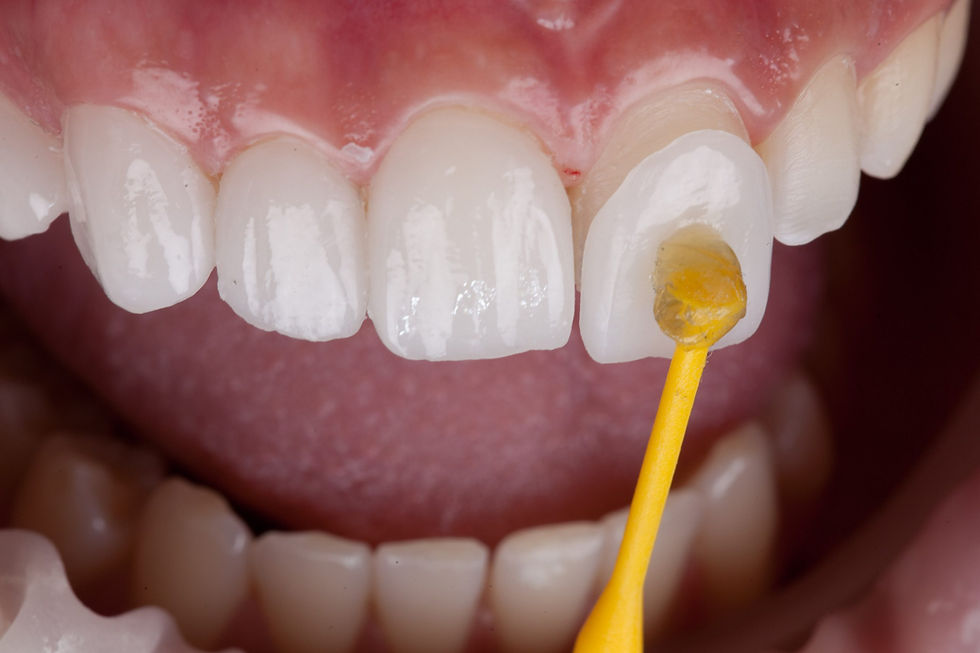
Porcelain veneers are thin ceramic shells produced in a dental laboratory and bonded to the front of the teeth. Composite bonding is a tooth-colored resin sculpted directly on the teeth in the dental chair. Both can change shape, color and proportion, but they age in very different ways.
Porcelain, usually feldspathic ceramic or lithium disilicate, keeps its color, translucency and surface shine for many years and resists stains from coffee, tea and wine. Composite is often more conservative and easier to repair, but over time it tends to absorb stains, lose shine and chip more easily, so it needs periodic polishing and touch-ups.
How do they compare at a glance?
Longevity: porcelain usually lasts longer with fewer interventions; composite requires more maintenance over the years
Color stability: porcelain does not stain; composite gradually changes color and shine
Tooth preservation: composite often needs little or no preparation; porcelain usually needs some, often minimal
Repairability: composite can be repaired in the chair; porcelain usually requires replacement if it fractures
Time in São Paulo: composite can often be completed in a few days; porcelain commonly requires one to two weeks
Investment logic: porcelain usually represents a larger initial investment; composite costs less upfront but more over time in maintenance
Which option is right for you? A decision guide by scenario
The most useful way to decide is to look at your own situation. These scenarios reflect the questions international patients most often bring to their first consultation.
If you have only a few days in Brazil
Composite bonding is often the most practical choice, because it is applied directly in the dental chair without a laboratory phase. Many patients complete bonding on a few teeth within a few days. If your long-term goal is porcelain, composite can also serve as a beautiful intermediate solution until you can return for a longer stay.
If you want the longest-lasting result
Porcelain veneers are usually the better choice. They maintain color and polish for many years and resist wear better than composite. Plan around one to two weeks of weekday appointments in São Paulo, so the laboratory can produce each veneer with individual color and translucency.
If preserving your natural teeth is your priority
Composite bonding is often the most conservative option and is frequently reversible. However, well planned porcelain veneers can also be very conservative, with preparation limited to the enamel or, in selected cases, no preparation at all. The decision depends on the position and shape of your teeth.
If your teeth are very dark or heavily restored
Porcelain usually performs better, because it can mask strong discoloration while maintaining a natural appearance. Composite can mask color too, but it may require more layers and tends to show changes over time.
If you clench or grind your teeth
Both options can work, but the habit must be managed first, usually with a night guard. Heavy forces can chip composite and fracture porcelain. In some cases, the dentist may adjust the material or design to better resist those forces.
If you want only small corrections
For closing a small gap, repairing a chip or reshaping one or two teeth, composite bonding is often the most efficient and conservative solution.
At BCX Odontologia in São Paulo, we often see patients arrive certain they want one material and leave choosing the other after seeing their smile tested with a mock-up. When the decision is based on their own face, habits and timeline, it feels clear rather than uncertain.
Moment one: before you travel to Brazil
How do I choose a responsible clinic?
A responsible clinic discusses both options honestly before recommending one. Use these checkpoints when comparing clinics in Brazil or anywhere else:
The clinic asks for photos and X-rays before suggesting a plan
The dentist is registered with the regional dental council, in São Paulo the CRO-SP
Porcelain and composite are both explained, including their limitations
A mock-up is offered so you can see the proposed shape before treatment
The plan specifies the material, number of teeth, visits and aftercare
No one promises a perfect result before examining you in person
What should I send for the online consultation?
At BCX Odontologia, planning starts with an online consultation before travel. Send a natural smile photo in daylight, close-up photos of your teeth from different angles, a full face photo while smiling, a recent panoramic X-ray if available and information about how many days you can stay in São Paulo. Your timeline is part of the clinical decision.
Should I whiten my teeth first?
When natural teeth will remain visible, whitening usually comes before veneers or bonding, because neither porcelain nor composite changes color afterwards. Bonding is typically done after a short waiting period following whitening, so the color stabilizes.
If you already have travel dates in mind, the BCX Odontologia concierge can organize your online consultation so your choice of material and your time in Brazil are planned together.
Moment two: during your treatment in São Paulo
What happens with composite bonding?
The teeth are cleaned and conditioned, and the resin is applied in layers, sculpted and polished. Depending on the number of teeth, this can be completed in one or a few appointments, with little or no anesthesia.
What happens with porcelain veneers?
After the smile is designed and approved with a mock-up, the teeth are prepared as planned, often minimally, and recorded with a digital scan. Temporary veneers protect the teeth while the laboratory works. At the final visit, the veneers are tried in, checked in natural light and bonded.
To see real smile transformations at our clinic in São Paulo, visit the BCX Odontologia | Dentista Brooklin (@bcxodontologia) • Instagram profile.
How is comfort ensured?
BCX Odontologia works with a low-volume model of around four patients per day, so each appointment is unhurried. For patients with dental anxiety, sedation options can be considered when clinically indicated.
How does communication work?
International patients are supported in English by the BCX Odontologia patient concierge before, during and after treatment, from the first contact to aftercare. During in-person appointments, communication with the dentist is supported by real-time translation technology, so you can understand every option and approve each detail of your smile.
How are the plan and payment presented?
You receive a written treatment plan with procedures, materials, number of teeth, visits and investment, along with an informed consent and a service agreement signed digitally. Treatment begins only after your approval.
What if my flight changes?
For porcelain, temporary veneers protect your teeth while the laboratory works, so a short delay can usually be accommodated. The concierge reorganizes your schedule with you. The clinic is located in front of the Vila Cordeiro monorail station, close to Av. Jornalista Roberto Marinho, with valet parking in the building.
Moment three: after you return home
How do I care for porcelain veneers?
Brush with a non-abrasive toothpaste, floss daily, keep regular cleanings and wear a night guard if you grind. Avoid biting hard objects such as ice or pens.
How do I care for composite bonding?
The same daily care applies, with the addition of periodic professional polishing to maintain shine and reduce staining. Limiting coffee, tea, red wine and tobacco helps preserve the color longer.
How does follow-up work from abroad?
The concierge remains available after you return, coordinating photos, questions and remote conversations with the dentist. You leave with a summary of the materials used, so a dentist in your home country can continue your care with accurate information.
Porcelain veneers vs composite bonding: choosing with confidence
The choice between porcelain veneers vs composite bonding is not about which material is better in general, but which one fits your goals, your habits and the time you have in Brazil. Porcelain offers longevity and color stability; composite offers speed and conservation. BCX Odontologia, which welcomes patients from more than 15 countries, helps each patient in São Paulo choose with clarity, after a clinical exam and a smile they have seen and approved.
Written by:
Dr. Beatriz Kawamoto
CRO-SP 133.746DDS, University of São Paulo (USP)
Studied Dentistry in Japan, Okayama University
MBA in Management and Innovation, USP DNA
Founder of BCX Odontologia, São Paulo, Brazil
Frequently Asked Questions
Which is better, porcelain veneers or composite bonding?
Neither is better for everyone. Porcelain veneers offer greater durability, stain resistance and color stability, while composite bonding is faster, more conservative and easier to repair. The right choice depends on how long you want the result to last, how much natural tooth you want to preserve, your habits and how many days you can stay for treatment. A clinical exam and smile planning define the best option.
What should I choose if I only have a few days in Brazil?
Composite bonding is often the most practical choice for short stays, because it is applied directly in the dental chair without a laboratory phase. Many patients complete bonding on a few teeth within a few days. If porcelain is your long-term goal, composite can also serve as an intermediate solution until you return for a longer stay.
How many days do I need in São Paulo for porcelain veneers?
Planning around one to two weeks of weekday appointments in São Paulo is common for porcelain veneers, because each veneer is produced in the laboratory between visits. Whitening, gum adjustments or a larger number of teeth can extend this time. An online consultation before travel helps define a realistic schedule for your case.
Do porcelain veneers last longer than composite bonding?
Yes, in most cases. With good care, porcelain veneers can last many years, often more than a decade, while maintaining color and shine. Composite bonding also lasts for years, but usually needs periodic polishing and touch-ups. Longevity for both depends on hygiene, regular checkups and protection against grinding.

Comentários